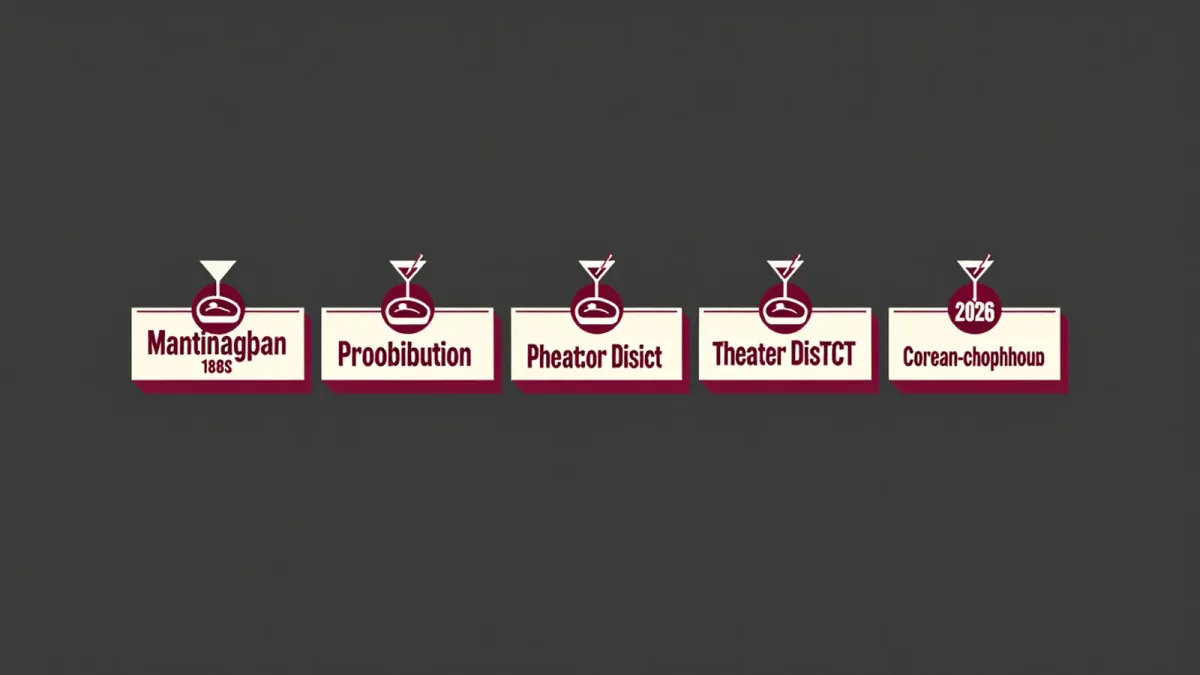
The Manhattan steakhouse is the city's most durable dining format: a room built around one ingredient, a staff measured in decades, and a menu that changes roughly once a generation. Its origins sit in the 1880s, when New York's stockyard and railroad money built chophouse dining rooms where the beef arrived from the yards and the portions announced the customer's standing.
Where does the format come from?
Nineteenth-century chophouses and the famous beef-and-ale rooms served the journalists, brokers and butchers who made their living from the animal economy around the East Side meat markets. The formula that survives — thick-cut sirloin, a baked potato the size of a fist, creamed spinach, a martini or a big cabernet — was standardized before Prohibition and survived it, partly because steakhouses were among the rooms that found ways through the dry years serving near-beer and redoubled porterhouse.
Related stories: Lunch at the Algonquin, dinner at the River Café of the mind: New York restaurants in film and literature · How New York invented restaurant criticism: from anonymous dinners to the star system.
How did the Theater District become steakhouse country?
Midtown's theater and hotel trade gave the format its second act: rooms where a curtain time set the clock and a client set the bill. The district's chophouse row — alongside its old Italian institutions — built the steakhouse into the default business-dinner machine, a room designed for volume, longevity and the expense account. The format's economics are the reason so many of its rooms outlast the neighborhoods around them: a steakhouse menu hedges well, wastes little, and trains staff into careers rather than stints.
Who is rewriting the format now?
Every generation restates the steakhouse in its own accent: the Japanese-wagyu rooms, the Korean coal-fired reinterpretations — the Cote model, now expanding into Midtown East with a 2026 chophouse — and the revival steakhouses trading on mid-century decor. What each borrows is the skeleton: a short menu priced with confidence, service measured in years, and a room that makes a man in a good suit feel like the room was built for him. Which, historically, it was.
The Manhattan steakhouse's next century is already visible on the map — same bones, new accents, and the expense account still holding the door.